
• Home
  • About Us
  • Contact
  • Term Of Use
  • Privacy Policy
Subscribe
bankingfortunes.com
  • Home
  • Economic Policies
  • Investment Market
  • Financial Context
  • Asset Management
  • Politics
  • Sports
  • Technology
  • Health
  • Contact Us
    • Terms of Use
    • About Us
    • Privacy Policy
🔥
  • Top stories
Aa
bankingfortunes.combankingfortunes.com
  • My Saves
  • My Interests
  • My Feed
  • History
Search
  • Pages
    • Home
    • Blog Index
    • Contact Us
    • Search Page
    • 404 Page
  • Home
    • Home 1
    • Home 2
    • Home 3
    • Home 4
    • Home 5
  • Home
    • Home 1
    • Home 2
    • Home 3
    • Home 4
    • Home 5
  • Home
    • Home 1
    • Home 2
    • Home 3
    • Home 4
    • Home 5
  • Home
  • Home
  • Categories
  • Categories
  • Demos
  • Personalized
    • My Feed
    • My Saves
    • My Interests
    • History
  • Demos
  • Demos
  • More Foxiz
    • Blog Index
    • Forums
    • Complaint
    • Sitemap
  • Categories
  • More Foxiz
    • Blog Index
    • Forums
    • Complaint
    • Sitemap
  • Categories
  • Categories
  • Categories
  • Bookmarks
  • Bookmarks
  • Bookmarks
  • More Foxiz
    • Sitemap
  • More Foxiz
    • Sitemap
  • More Foxiz
    • Sitemap
Have an existing account? Sign In
Follow US
© 2022 Foxiz News Network. Ruby Design Company. All Rights Reserved.
bankingfortunes.com > Blog > Politics > Rising Negative Sentiment Toward China in Central Europe’s Visegrad Group
Politics

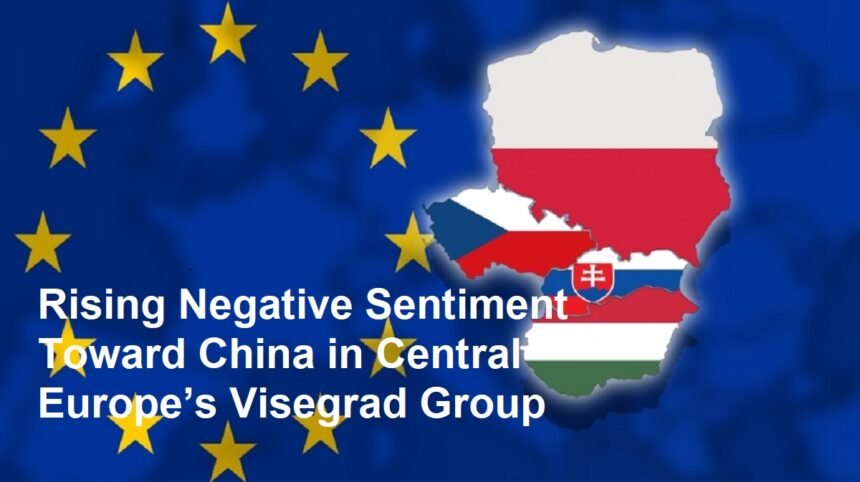
Rising Negative Sentiment Toward China in Central Europe’s Visegrad Group

5 Min Read
SHARE

In recent years, public sentiment toward China has increasingly turned negative across the Central European countries that form the Visegrad Group—Czech Republic, Hungary, Poland, and Slovakia. Despite growing economic ties and Chinese investments in the region, concerns over China’s political stance, human rights record, and geopolitical behavior have fueled skepticism and distrust among the populations and political elites of these nations.

Overview of the Visegrad Group and China Relations

The Visegrad Group (V4) is an informal alliance of four Central European countries—Czech Republic, Hungary, Poland, and Slovakia—that cooperate on political, economic, and security issues within the European Union framework. China has sought to deepen its influence in the region through investments, infrastructure projects, and cultural exchanges, aiming to establish a foothold in Europe’s eastern flank.

However, these efforts have met with mixed reactions. While economic cooperation has expanded, public opinion surveys reveal a growing wariness of China’s intentions and policies.

Public Opinion Trends

Recent surveys highlight the extent of unfavorable views toward China in the V4 countries:

  • In Poland, about 71% of the population holds an unfavorable view of China. Despite increasing Chinese investments and economic exchanges, trust in China has declined, especially after the outbreak of the war in Ukraine. Poland’s traditionally close ties with the United States also influence its cautious stance toward Beijing.
  • The Czech Republic shows the highest proportion of negative views among the V4 nations, with 59% of respondents expressing unfavorable opinions. Issues such as China’s policies on Taiwan and Tibet, human rights violations, and authoritarian governance contribute to this sentiment. The Czech public ranks China among the top three least favored countries.
  • Hungary’s public opinion is similarly skeptical, with over half of the population holding negative views. This sentiment persisted even after Chinese President Xi Jinping’s visit to Hungary in 2024. Concerns about Chinese investments, debt dependency, and projects like the China-funded railway and Fudan University campus in Budapest have fueled apprehension.
  • In Slovakia, around 42% of people view China negatively, with only 28% holding positive opinions. Environmental concerns, China’s military power, and its impact on democracy abroad are key factors shaping Slovak perceptions. Despite some support for Chinese investments, the overall public sentiment remains cautious.

Factors Driving Negative Sentiment

Several factors contribute to the rising skepticism toward China in the Visegrad countries:

  • Geopolitical Ambiguity: China’s ambiguous position on the war in Ukraine and its growing global assertiveness have raised alarms. The V4 countries increasingly see China not just as an economic partner but as a systemic rival.
  • Human Rights Concerns: Reports of human rights abuses in Xinjiang, Tibet, and Hong Kong, along with China’s authoritarian governance model, clash with the democratic values upheld by the V4 nations.
  • COVID-19 Pandemic Management: The perceived mishandling and lack of transparency by China during the COVID-19 outbreak have damaged its image.
  • Economic and Debt Risks: Chinese investments, while economically beneficial in some respects, have sparked fears of debt dependency and loss of sovereignty, often described as a “Trojan Horse” effect.
  • Influence on Domestic Politics: There are concerns about China’s attempts to influence political narratives and public opinion through media and cultural initiatives.

Political and Strategic Implications

The growing negative sentiment has led V4 governments to recalibrate their foreign policies toward China. Poland, for example, has strengthened its alignment with the United States and NATO, viewing China as a strategic competitor. The Czech Republic has taken a similarly cautious approach, emphasizing democratic values and human rights in its China policy.

Hungary remains somewhat more open to Chinese engagement but faces internal debates about the risks involved. Slovakia’s government and public are increasingly aware of the potential downsides of close cooperation with China.

Despite China’s efforts to expand its influence in Central Europe, the Visegrad Group countries exhibit rising skepticism and negative sentiment toward Beijing. This trend reflects broader geopolitical shifts, concerns over human rights, and fears of economic dependency. The V4 nations are balancing economic interests with strategic and democratic values, leading to a more cautious and critical stance on China.


bankingfortunes.com
Share This Article
Twitter Email Copy Link Print
Previous Article U.S. Fighter Jet Falls into Red Sea from USS Harry S. Truman During Towing Operation
Next Article Chinese Coast Guard Seizes Control of Reef Near Key Philippine Military Base in South China Sea
Leave a comment

Leave a Reply Cancel reply

Your email address will not be published. Required fields are marked *

World Wide

Politics

Indonesian President Prabowo Subianto Meets Sultan Hassanal Bolkiah at Istana Nurul Iman in Brunei

On Wednesday, May 14, 2025, President Prabowo Subianto of the Republic of Indonesia arrived at Istana Nurul Iman in Bandar…

Technology

Purdue University Students Set New World Record with Purdubiks Cube Robot Solving Rubik’s Cube in 0.103 Seconds

In a remarkable feat of engineering and robotics, a team of students from Purdue University has shattered the world record…

EconomyTechnology

U.S. AI Leads, China Closes Gap

On May 10, 2025, during a high-profile hearing before the United States Senate, Sam Altman, the CEO of OpenAI, delivered…

Trending On

Thousands Pay Nocturnal Tribute as Pope Francis Lies in State at St. Peter’s Basilica

VATICAN CITY — In a profound display of reverence, nearly 20,000 pilgrims gathered under the…

Toyota and FAW Launch Mass Production of bZ5 Electric SUV in Tianjin with BYD Battery Supply

On Friday, May 16, 2025, Toyota, in partnership with its local Chinese collaborator FAW, officially…

Essential List of Prohibited Items on Flights You Need to Know

Traveling by air requires awareness of certain restrictions to ensure safety and compliance with airline…

British Airways’ £100 Million AI Investment Drives Dramatic Improvement in Flight Punctuality

British Airways, one of the world’s leading airlines, has recently announced that its substantial investment…

Syria Arrested Two Palestinian Islamic Jihad Militia Leaders, Signaling a Shift in Middle East Alliances

Syrian authorities announced on Tuesday, April 22, 2025, the detention of two senior members of…

Kyrgyzstan’s Anthem Contest: A Quest for National Identity Beyond the Soviet Shadow

Kyrgyzstan's recent announcement of a national competition to compose a new national anthem signals more…

India-Pakistan Relations on the Brink of War: Assessing the Military Strengths of Both Nations

The longstanding rivalry between India and Pakistan has escalated sharply, bringing the two nuclear-armed neighbors…

Comparative Analysis of the United States’ Golden Dome and Israel’s Iron Dome Missile Defense Systems

Missile defense systems have become critical components in modern military strategies, particularly for nations facing…

Resurgence of Separatist Movements in Papua, Maluku, and Aceh Draws International Attention

The recent appearance of slogans such as “Free Aceh,” “Free Maluku,” and “Free Papua” at…

Politics

A Show of Strength: Analyzing the 2025 Balikatan Exercise in the South China Sea

On April 21st, 2025, the Philippines and the United States commenced a large-scale joint military exercise in the South China…

4 Min Read
Asset Management

Components and Functions of Querycal Jobs

Introduction to Querycal Jobs In a world surrounded by data, having insight into Querycal Jobs has become a necessity. Querycal…

10 Min Read
TechnologyWorld

Google Unveils Gradient Color Scheme for Its Iconic ‘G’ Logo After 10 Years

In 2025, after a decade of using its iconic single-color "G" logo, Google unveiled a fresh new look by introducing…

6 Min Read
Investment Market

Procedures for Calculating and Reporting Surcharge

Understanding Surcharge Surcharge is a term commonly used in the field of taxation, and can be interpreted as an addition…

8 Min Read
Asset Management

Example of Implementing Sales Enablement

Sales Enablement is a strategic approach that aims to increase the efficiency and effectiveness of the sales process by providing…

8 Min Read
SportsWorld

Japan’s Hajime Moriyasu Chooses Stability Over Major Rotation for June 2025 Match Against Indonesia

In preparation for the upcoming international fixture against Indonesia in June 2025, Japan’s national team head coach, Hajime Moriyasu, has…

5 Min Read
World

5 Reasons Why Trees Are Prone to Lightning Strikes: Science Behind Nature’s Giant Conductors

Lightning strikes are a powerful and often destructive force of nature, with trees frequently acting as unintended lightning rods. While…

5 Min Read
Politics

Israeli Security Minister Bezalel Smotrich Declares Intent to Completely Destroy Gaza and Evacuate Its Palestinian Population

In a highly controversial and alarming statement, Israel’s Minister of Security, Bezalel Smotrich, declared that Gaza will soon be completely…

5 Min Read
bankingfortunes.com
Facebook Twitter Youtube Rss Medium

Greetings to you

BankingFortunes: Your instant connection to breaking stories and live updates. Stay informed with our real-time coverage across politics, tech, business, and more. Your reliable source for 24/7 news.

Top Categories
  • About Us
  • Contact Us
  • Privacy Policy
  • Terms of Use
  • Economic Policies
  • Investment Market
  • Financial Context
  • World
  • Politics
  • Sports
  • Economy
  • Technology
  • Health
  • Asset Management

Address

Bahnhofstrasse 26A, 8001 Zürich, Switzerland. +41 44 220 15 17

© BankingFortunes Network.  2019 – 2025. All Rights Reserved.

Welcome Back!

Sign in to your account

Lost your password?